
Lead Routing and Handoffs: Closing the Gaps Where Deals Die
Speed-to-lead, round-robin vs territory, the MQL-to-AE handoff, and follow-up SLAs. Find where leads leak and plug it, with a routing rules checklist.
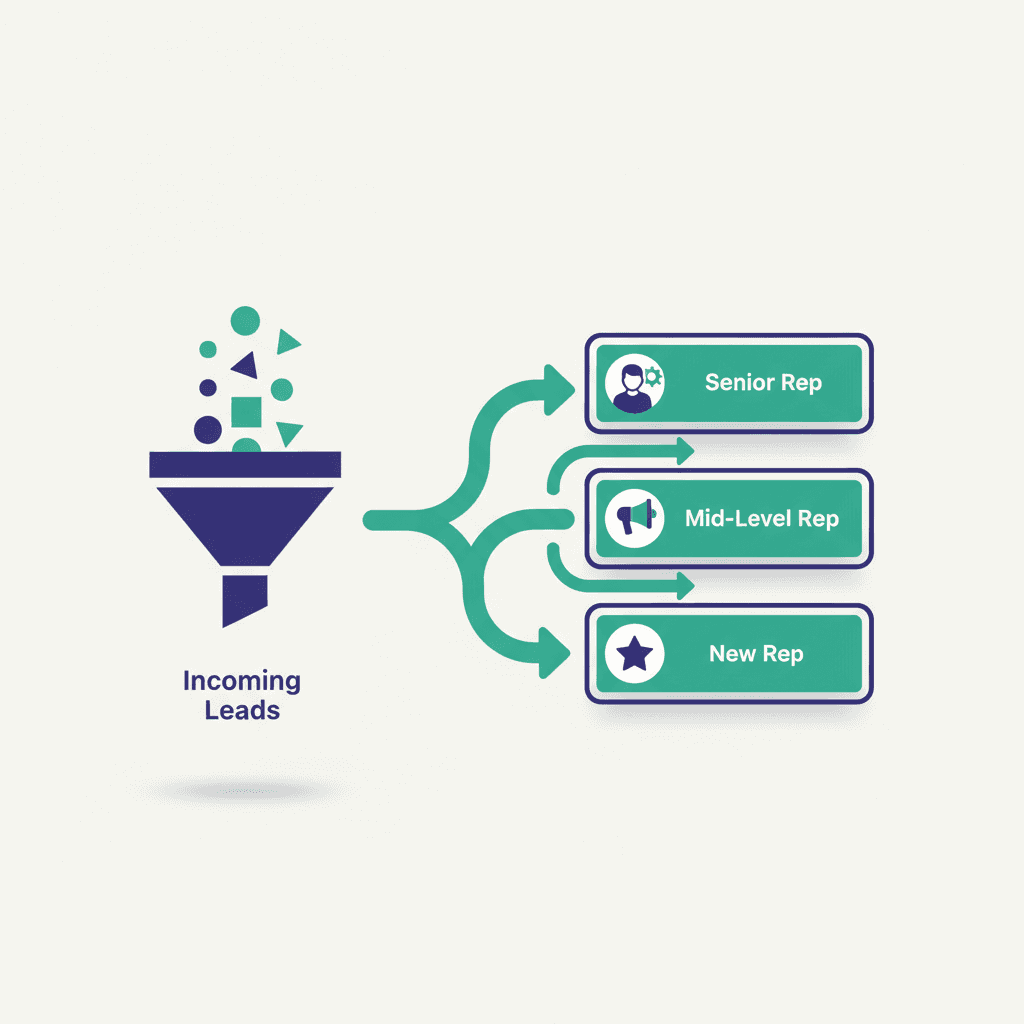
A marketing team I worked with was proud of a campaign that drove a wave of demo requests. Pipeline looked great in the dashboard. Then a sales leader pulled the actual records and found that a third of those requests had never been contacted at all. Not late. Never. They had landed in a queue, gotten assigned to a rep who was on vacation, and quietly aged into irrelevance.
Marketing had done its job. Sales had done its job. The leads still died, in the gap between the two. That gap, the handoff, is where more revenue leaks than almost anywhere else in the funnel, and it is invisible on most dashboards because no single team owns it.
Routing is not a plumbing problem. It is a revenue problem wearing a plumbing costume. Here is how to find the leaks and plug them.
Speed-to-Lead Is the Whole Ballgame
The single highest-leverage variable in routing is how fast a human responds to an inbound lead. The decay is brutal and fast. A lead contacted within a few minutes is dramatically more likely to convert than the same lead contacted an hour later, and the curve falls off a cliff after the first hour.
Most teams measure their response time in hours or days and have no idea. They think they are fast. They are not.
Your competitor who calls in five minutes beats your better product that calls in five hours. Speed-to-lead is the cheapest competitive advantage you are probably ignoring.
The fix is not "tell reps to hurry." It is to remove every manual step between form submission and first touch. Auto-assignment, instant notification, and a response SLA with teeth. We will get to the SLA. First, decide how leads get assigned at all.
Round-Robin vs Territory
There are two main ways to decide which rep gets a lead, and teams waste enormous energy arguing about it. The honest answer is that they solve different problems.
| Round-Robin | Territory | |
|---|---|---|
| Best for | High inbound volume, similar deals | Account-based, regional, or vertical motion |
| Strength | Fair distribution, fast, simple | Reps build expertise and relationships |
| Weakness | Ignores fit and rep specialization | Uneven volume, leads wait for "their" rep |
| Speed-to-lead | Excellent | Risk of delay if owner unavailable |
Round-robin wins on speed and fairness. Territory wins on relevance and expertise. Plenty of teams run a hybrid: territory for named or high-value accounts, round-robin for everything else. Salesforce and most routing tools support both, and threads on r/salesforce are full of people running exactly this hybrid.
Whatever you pick, the non-negotiable rule is the same: no lead waits on an unavailable rep. Build in fallback assignment so a rep who is out, at capacity, or simply slow does not become a black hole. The opening story was a black hole nobody designed on purpose.
The MQL-to-AE Handoff
This is the seam where the opening story went wrong, and it goes wrong the same way everywhere: nobody agrees on what is being handed off, or what happens after it lands.
Two failure modes dominate. Marketing throws leads over the wall that sales considers junk, so sales stops working any of them. Or sales receives genuinely good leads but has no obligation to follow up on a clock, so the leads sit.
Both come back to shared definitions and shared accountability. You cannot route what you have not defined. If marketing's MQL and sales's idea of a qualified lead are different, every handoff is a fight. Settle that first using clear MQL and SQL definitions, and make sure the lead scoring model feeding routing is one both teams trust. As First Round Review and others have noted, alignment problems almost always trace back to undefined terms.
A clean handoff has three parts:
- An agreed definition of what qualifies for the handoff.
- Complete context passed with the lead, so the AE is not starting cold.
- A two-way SLA, which is the part most teams skip.
The SLA on Follow-Up
An SLA, or service level agreement, between marketing and sales is the contract that makes the handoff real. It cuts both ways, and that is what makes it work.
Marketing commits to deliver leads that meet the agreed definition, with the agreed information attached, at the agreed volume. Sales commits to contact those leads within a set time and to make a set number of attempts before giving up. Both sides are measurable, and both sides are accountable.
A workable starting point:
- First contact attempt within 5 minutes for high-intent inbound (demo, talk to sales).
- First contact within 1 business hour for other MQLs.
- A minimum of 5 to 7 contact attempts across calls, emails, and other channels before a lead is marked dead.
- Leads not actioned within SLA auto-reassign to another rep or back to a queue.
That last point is the enforcement mechanism. Without auto-reassignment, an SLA is a suggestion. The full structure, including what each side commits to and how you review it, lives in our sales and marketing SLA playbook.
Where Leads Actually Leak
When you go looking, the leaks cluster in a handful of predictable places:
- Form to CRM. Integration breaks silently, leads never get created. Audit this monthly.
- CRM to assignment. Leads sit unassigned because a rule has a gap or a rep is out.
- Assignment to first touch. The big one. Reps do not see the lead, or do not prioritize it.
- First touch to qualified. Reps give up after one attempt. The 5-to-7 attempt rule fixes this.
- Disqualified but recyclable. Good-fit, bad-timing leads get marked dead instead of nurtured.
Gong's analysis of follow-up patterns consistently shows that most reps quit far too early, leaving recoverable pipeline on the table. The recycle path matters as much as the fast path.
The Routing Rules Checklist
Here is a checklist to audit or build your routing. Run it end to end and you will find your leaks.
LEAD ROUTING & HANDOFF CHECKLIST

INTAKE
[ ] Every inbound source maps to a CRM lead record
[ ] Form-to-CRM integration monitored (alert on failure)
[ ] Required fields enforced or enriched on creation
[ ] Spam / student / competitor filtering in place

QUALIFICATION
[ ] MQL definition agreed by sales AND marketing
[ ] Lead score thresholds trigger routing automatically
[ ] Hard disqualifiers auto-suppressed before routing

ASSIGNMENT
[ ] Assignment method chosen (round-robin / territory / hybrid)
[ ] Named/high-value accounts route to owner
[ ] Capacity limits per rep configured
[ ] Fallback assignment for unavailable / out-of-office reps
[ ] No lead can sit unassigned > 5 minutes

SPEED-TO-LEAD
[ ] Instant notification to assigned rep (not just CRM update)
[ ] High-intent leads flagged for 5-minute SLA
[ ] First-touch time tracked and reported per rep

HANDOFF (MQL -> AE)
[ ] Full context passed (source, score, activity, notes)
[ ] Two-way SLA documented and agreed
[ ] AE accepts/rejects with a reason (feedback loop)

FOLLOW-UP SLA
[ ] First contact: 5 min (high intent) / 1 hr (other)
[ ] Minimum 5-7 attempts before "dead"
[ ] Multi-channel cadence defined
[ ] Un-actioned leads auto-reassign

RECYCLE
[ ] Good-fit / bad-timing leads route to nurture, not trash
[ ] Recycled leads re-score and re-enter routing

REVIEW
[ ] SLA attainment reviewed in operating cadence
[ ] Leak points audited monthly
[ ] Rejected-lead reasons reviewed with marketing
Make It a Living System
Routing is not set-and-forget. The leaks move as your team, volume, and product change. The fix is a standing review: pull SLA attainment, first-touch times, and rejected-lead reasons into your GTM operating cadence and look at them with both teams in the room. When marketing sees why sales rejected a lead and sales sees how fast marketing is delivering, the blame game ends and the system improves itself. This is the same alignment muscle described in our GTM alignment playbook, and Gartner frames demand handoffs as an ongoing operating discipline rather than a one-time setup.
The deals dying in your handoff gap are the cheapest pipeline you will ever recover. They are already interested. They already raised a hand. All you have to do is not drop them.
Audit your routing this week. Grab the checklist and the SLA worksheet from our templates library, pull the full set of routing and handoff tools from the RevOps toolkit, and bring your worst leak story to the All Work All Play community. We collect them. The "never contacted" ones still hurt the most.
Put this to work
Build a custom version in the toolkit, or grab a ready-made template.