
MQL vs SQL vs SAL: Definitions Your Whole Team Will Actually Agree On
Stop the lead-stage confusion. Clear, usable MQL, SQL, SAL, and opportunity definitions for B2B teams, plus a single-source-of-truth block you can paste into your CRM.
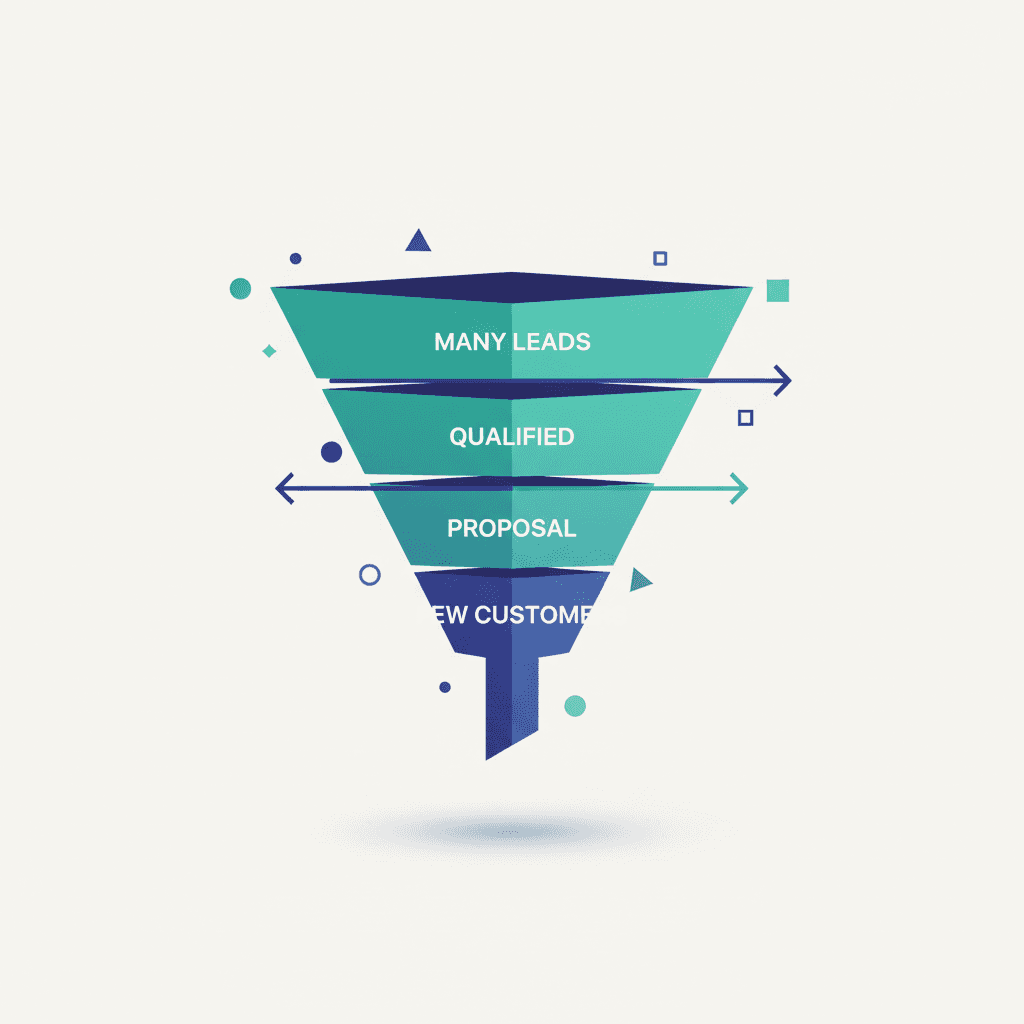
Search r/salesforce and you will find a thread titled, more or less, "MQL / SAL / SQL / Opportunity confusion" posted roughly every other week. Over on r/b2bmarketing, someone asks how modern B2B SaaS teams actually define an MQL, and the replies contradict each other completely. One person says an MQL is anyone who downloads an ebook. The next says that is insane and an MQL requires a demo request. They are both describing real systems at real companies.
This is not a small problem. It is the root problem. Every alignment failure I have ever diagnosed traces back to two teams using the same three-letter acronyms to mean different things.
You cannot write an SLA, build a routing rule, score a lead, or run a funnel review if "MQL" is a vibe. Definitions come first. Everything else is downstream.
Why fuzzy definitions poison everything
Imagine two people negotiating a price in two different currencies without saying so. They will agree on a number and then both feel cheated. That is your funnel when sales and marketing each carry a private definition of "qualified."
Marketing reports 500 MQLs. Sales says they got maybe 50 real leads. Both numbers are accurate inside their own definition. The gap is not a performance problem, it is a translation problem, and no amount of effort closes it.
Shared definitions end the blame game. Not because they make anyone work harder, but because they make it impossible to argue about what the words mean.
The fix is boring and powerful: write the definitions down, make them behavioral, store them in one place everyone trusts, and review them on a schedule. That is it. The rest of this piece tells you exactly how.
The four stages, defined behaviorally
The trick to a definition that holds up is to make it about observable behavior and fit, not internal feelings. "Seems interested" is not a definition. "Requested a demo and matches ICP" is.
Here is the standard B2B progression and what each stage should actually mean.
| Stage | What it means | Who owns it | Trigger to advance |
|---|---|---|---|
| Lead | Known contact, any source | Marketing | Captured in CRM |
| MQL | Fits ICP and shows buying intent | Marketing | Hits score threshold |
| SAL | Sales has accepted it as worth working | Sales | Rep accepts within SLA |
| SQL | Sales confirmed need, budget, timing signals | Sales | Rep verifies criteria |
| Opportunity | Active deal with a number and a date | Sales | Entered as pipeline |
The two most-confused stages are MQL and SAL, so let me draw the line sharply.
MQL: the marketing handoff
A Marketing Qualified Lead is marketing's claim: "this person fits who we sell to, and they are showing signals that they might buy." It is built from two ingredients. Fit (do they match your ideal customer profile) and intent (are they doing things that suggest interest). A single ebook download is intent without much weight. A pricing-page visit plus a demo request plus an enterprise-sized company is a strong MQL.
How you weight those signals is a lead scoring model question, and getting the threshold right is what separates a useful MQL from spam.
SAL: the missing handshake
The Sales Accepted Lead is the stage most teams skip, and skipping it is why the blame game never ends. SAL is sales raising its hand and saying "yes, I accept this lead as worth my time." It is the acknowledgment that the handoff actually happened.
Without a SAL stage, marketing throws leads over the wall and assumes they were worked. Sales quietly ignores the ones they do not like. Nobody can see the gap. Add a SAL stage with an acceptance SLA and suddenly the handoff is measurable: what percentage of MQLs does sales accept, and how fast? That number is the heartbeat of the sales and marketing SLA.
SQL and opportunity
A Sales Qualified Lead is a SAL that sales has dug into and confirmed has a real need and real buying signals. An Opportunity is when it becomes a deal with a dollar value and a close date in your pipeline. The line between SQL and Opportunity should be crisp enough that your forecast does not wobble, which is a pipeline hygiene discipline in its own right.
The fit-plus-intent matrix
Most arguments about whether something is an MQL dissolve when you separate the two axes. Fit and intent are different questions and deserve different responses.
| Low intent | High intent | |
|---|---|---|
| High fit | Nurture (right buyer, not ready) | MQL now (route fast) |
| Low fit | Ignore / disqualify | Sales review (intent but off-ICP) |
The high-fit, high-intent box is your MQL. The high-fit, low-intent box is your nurture program. Confusing the two is how marketing ends up "delivering volume" that sales correctly rejects. Gartner research on B2B buying has consistently shown that most of the buying journey happens before a buyer is ready to talk to sales, which is exactly why the low-intent box exists and should not be forced into the pipeline early.
The single-source-of-truth definitions block
Paste this into your CRM description fields, your onboarding docs, and the top of your shared dashboard. Fill in the brackets with your real criteria. The point is that there is exactly one version of this, and everyone links to it.
LEAD STAGE DEFINITIONS  -  single source of truth
Last reviewed: [DATE]   Owner: [REVOPS]

LEAD
  A known contact captured in the CRM from any source.
  No qualification implied.

MQL  (Marketing Qualified Lead)  -  owned by Marketing
  FIT: matches ICP -> [industry], [size: __ employees],
       [role/title], [region]
  INTENT: lead score >= [threshold], built from
       [demo request, pricing view, repeat visits, etc.]
  Becomes MQL automatically when BOTH fit and intent
  thresholds are met.

SAL  (Sales Accepted Lead)  -  owned by Sales
  A rep has reviewed the MQL and accepts it as worth
  working, within [1 hour] of routing.
  If rejected: rep logs a reason code.

SQL  (Sales Qualified Lead)  -  owned by Sales
  A SAL where the rep has confirmed:
   [ ] real need / pain identified
   [ ] rough budget signal
   [ ] decision timeline signal
   [ ] right contact or path to decision maker

OPPORTUNITY  -  owned by Sales
  An active deal with a [dollar amount] and a
  [close date], entered in the pipeline.

----------------------------------------------------------
RULES
- These definitions live ONLY here. Everything else links.
- Reviewed every [quarter] by Sales + Marketing + RevOps.
- Changing a definition requires sign-off from both leads.
Definitions are not "set and forget"
Your ICP changes. Your scoring model gets smarter. New channels produce new intent signals. Definitions that were perfect a year ago slowly drift out of sync with reality.
That is why the definitions block has a review date and an owner. Put a quarterly definitions review on the calendar as part of your operating cadence. Both SaaStr and HubSpot make the same point in their go-to-market writing: the companies that scale cleanly are the ones that treat their funnel definitions as living infrastructure, not a one-time setup.
And remember that definitions are step one of a larger system. They feed the SLA, the routing rules, the comp plan, and the dashboard. The full GTM alignment playbook shows how all of it connects.
Build your definitions, do not just borrow ours
Use the definitions builder in the GTM Alignment Toolkit to generate a version tuned to your ICP and scoring, and grab the ready-to-edit block from the template library. The whole point is one source of truth, owned by RevOps, that both teams actually agree on.
Stuck on where to draw a line, or fighting about it internally right now? Bring the specifics to r/revops. Half the threads there are exactly this debate, and the collective scar tissue is worth more than any single company's playbook.
Put this to work
Build a custom version in the toolkit, or grab a ready-made template.