
Pipeline Hygiene and Forecasting Both Teams Can Trust
Garbage pipeline data breaks forecasts and alignment. Stage definitions, exit criteria, and a hygiene routine that make the forecast believable again.
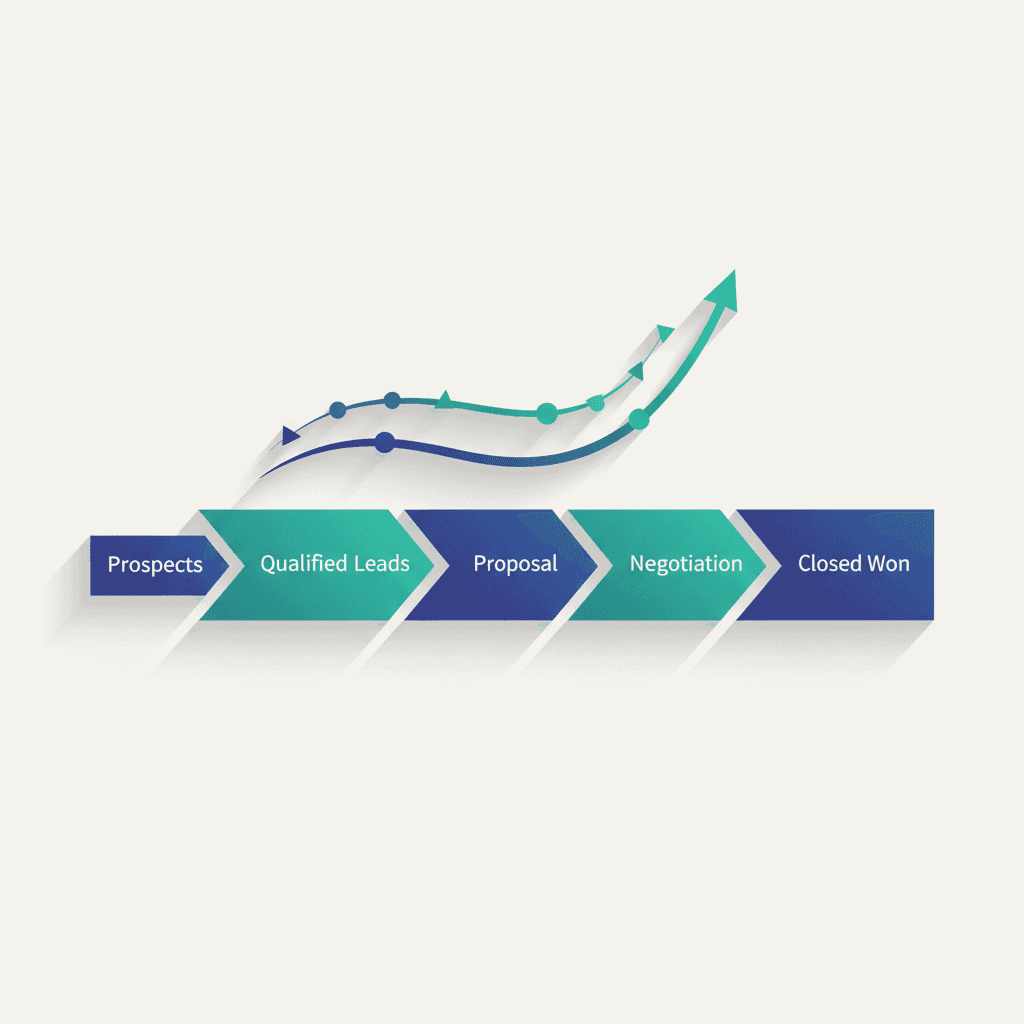
The forecast said $1.4 million would close that quarter. The team closed $610,000.
When the leadership team did the post-mortem, the cause was not a market shift or a competitor or a slow quarter. It was the pipeline itself. A third of the "committed" deals had no next meeting scheduled. Several "proposal stage" opportunities had never seen a proposal. One deal sitting in late stage had a primary contact who had left the company four months earlier.
The forecast was not wrong because the forecasting was bad. It was wrong because the data underneath it was fiction, and you cannot forecast fiction. You can only launder it into a confident-looking number that falls apart the moment cash needs to show up.
This is the quiet alignment killer. When sales and marketing cannot trust the pipeline, every conversation becomes a negotiation over whose numbers are real. Hygiene is not janitorial work. It is the precondition for a forecast anyone can believe.
Why Dirty Pipeline Breaks Everything
A dirty pipeline does three kinds of damage at once.
It breaks the forecast, because stages no longer mean anything consistent. It breaks alignment, because marketing optimizes toward "pipeline created" that sales knows is inflated. And it breaks trust, because once a leader gets burned by a confident forecast that missed, they stop believing the next one, and then you are managing by gut.
A pipeline stage is a promise about reality. "Proposal stage" should mean a proposal exists. The instant a stage becomes a place reps park deals to look busy, your forecast is measuring vibes.
The fix is not a better forecasting algorithm. The fix is making each stage mean exactly one thing, enforcing that meaning, and cleaning the pipeline on a routine so drift never compounds. Gartner has noted that sales organizations consistently overestimate late-stage conversion, and a large part of that is stages that inflate because nobody defined what they require.
Stages Are Promises, Not Vibes
The root cause of most dirty pipelines is that stages describe how a rep feels rather than what is objectively true. "Qualified" feels qualified. "Commit" feels like commit. Feelings are not auditable.
The fix is exit criteria. Each stage gets a short list of objective, verifiable conditions that must be true before a deal can advance. Not "the rep thinks it is going well." Instead: a meeting is booked, a decision-maker is identified, a proposal has been sent, a verbal commitment exists with a date.
The test for a good exit criterion is simple. Could a second person look at the deal and agree the criterion is met without asking the rep how they feel? If yes, it is an exit criterion. If no, it is a vibe.
Gong's analysis of deal data reinforces this: the signals that actually predict whether a deal closes are observable behaviors, not seller optimism. Multi-threading, recent buyer engagement, and concrete next steps beat a high "confidence" rating every time. Build those observable signals into your exit criteria and your forecast starts tracking reality.
A Believable Forecasting Model
Once stages are clean, forecasting gets simpler, not harder. You do not need three models in tension. You need one method the whole team understands, cross-checked against reality.
Most teams blend two views. The first is stage-weighted: each stage has a historical close rate, and the weighted sum is your expected number. The second is rep commit: what sellers actually pledge will close, deal by deal, with a next step on record. When those two views diverge sharply, you have found exactly the deals worth scrutinizing.
| Forecast input | What it tells you | Failure mode if data is dirty |
|---|---|---|
| Stage-weighted pipeline | Statistical expectation from history | Garbage in, confident garbage out |
| Rep commit (deal-by-deal) | On-the-ground reality | Sandbagging or happy ears |
| Recent buyer engagement | Whether deals are actually live | Stale deals look alive |
| Next step on record | Whether there is real momentum | "Following up" is not a next step |
The discipline that makes any of this work is the same: clean stages, enforced exit criteria, and a routine that strips out the dead weight before it pollutes the math. First Round Review operator interviews keep landing on the same point, which is that forecast accuracy is a hygiene problem far more often than it is a modeling problem.
The Hygiene Routine
Clean data is not a one-time cleanup. It is a routine, run on a cadence, so drift never accumulates. Here is a workable rhythm:
- Weekly: every open deal has a next step with a date. No next step means the deal gets worked or pushed out, not parked.
- Weekly: any deal with no buyer activity in 21 days gets flagged for review.
- Monthly: audit a sample of deals against their stage exit criteria. Mismatches get corrected and discussed.
- Quarterly: close out the zombies. Deals that have not moved in two quarters are not pipeline, they are wishful thinking.
This routine is most of the battle. It is also where a single source of truth pays off, because you cannot run a hygiene routine across two competing systems. If that is your situation, fix it first with our RevOps for small teams approach.
The Artifact: Stage Exit-Criteria Template
This is the document that turns vibes into promises. Adapt the stages to your motion, but keep the rule that every criterion must be objectively verifiable by someone other than the rep. Copy it.
PIPELINE STAGE EXIT-CRITERIA TEMPLATE

Rule: a deal cannot advance until EVERY criterion below is TRUE
and verifiable by someone other than the owning rep.

STAGE 1: QUALIFIED
[ ] Budget range confirmed or sizing conversation held
[ ] Decision-maker or champion identified by name + role
[ ] Defined business problem documented in the deal
[ ] A discovery call has occurred (not just scheduled)
   Default close rate: ____%   Median days in stage: ____

STAGE 2: SOLUTION FIT
[ ] Demo or working session delivered to a real buyer
[ ] Use case mapped to specific buyer requirements
[ ] At least two buyer-side contacts engaged (multi-threaded)
[ ] Next step booked with a date on the calendar
   Default close rate: ____%   Median days in stage: ____

STAGE 3: PROPOSAL
[ ] Written proposal or pricing actually sent
[ ] Procurement / security / legal path identified
[ ] Economic buyer confirmed (not just the champion)
[ ] Mutual timeline or close plan agreed in writing
   Default close rate: ____%   Median days in stage: ____

STAGE 4: COMMIT
[ ] Verbal commitment from the decision-maker
[ ] Specific close date agreed by the buyer
[ ] Open items have named owners and dates
[ ] No blocker without a documented resolution plan
   Default close rate: ____%   Median days in stage: ____

HYGIENE GUARDRAILS (apply to all stages)
[ ] Every open deal has a next step with a date
[ ] Deals with 21+ days of no buyer activity get reviewed
[ ] Stage cannot be changed without meeting exit criteria
[ ] Quarterly: deals stalled 2+ quarters are closed-lost
The close rate and median-days fields are not decoration. Fill them in from your own history and they become the backbone of your stage-weighted forecast. Now your forecast is grounded in your actual conversion math instead of a number someone wished into the dashboard.
Comp Is the Enforcer
Here is the uncomfortable part. You can write perfect exit criteria and they will still erode if your compensation rewards the wrong thing. Comp drives behavior more than any process document. If reps are measured on pipeline created with no penalty for it being junk, you will get junk pipeline, professionally maintained.
Align the incentives so that clean, accurate pipeline is what gets rewarded, and stage inflation costs something. We get into the mechanics in our sales comp plans guide. The forecast you can trust is downstream of the behavior you pay for.
Bessemer has made the related point repeatedly: efficient revenue organizations treat pipeline data as a shared asset with real accountability, not a sales-only artifact that other teams squint at and hope is true.
Make Your Forecast Believable
A forecast both teams trust is not a luxury. It is what lets marketing invest with confidence, lets sales commit without fear, and lets leadership plan without bracing for a miss.
Start with the exit-criteria template above. Get sales and marketing to agree on what each stage means. Stand up the weekly hygiene routine. Then watch your forecast start to track reality within a quarter or two.
The full template and the supporting dashboards live in our templates library, and the broader GTM toolkit ties hygiene to definitions and SLAs. If you want to see how other teams structure their stages, the operators in r/sales and r/revops argue about exit criteria constantly, and the arguments are worth reading. Share your stage definitions and ask where they would poke holes. A pipeline that survives that scrutiny is a pipeline you can forecast.
Put this to work
Build a custom version in the toolkit, or grab a ready-made template.